
Continuing on with the discussion of total contact casting we would be remiss not to discuss the very interesting work by Dr. Piaggesi on the effects of offloading on wound bed histology (link to the article below).
It is very easy to understand the mechanical benefits that are imparted on the wound bed when a total contact cast is utilized but how do the changes in wound bed pressure and shear translate into changes at the histologic level of a non-healing diabetic plantar foot ulcer.
Using a semiquantitative approach in a small population of diabetic patient’s Dr. Piaggesi and his group were able to identify significant changes in inflammatory elements as well as matrix alterations, vessel disruptions, inflammation, and debris. The study looked at a cohort of 20 diabetic patients with comparable lesions and glycemic control. The ulcers were biopsied at baseline and then the patients were assigned to offloading with TCC or topical care with no specific offloading . After 20 days the ulcers were again biopsied and examined by independent pathologists looking for: 1) presence and severity of hyperkeratosis; 2) presence and severity of fibrosis; 3) number and integrity of cutaneous annexes; 4) number and integrity of capillaries; 5) presence and distribution of inflammatory reaction; 6) presence and distribution of cellular and bacterial debris; and 7) presence and distribution of granulating tissue.
Patients in the TCC group showed a marked reduction in ulcer size after 20 days of casting (P < 0.01). The histopathological features of the two groups markedly differed. The patients in the control arm showed a predominance of inflammatory elements as well as matrix alterations, vessel disruptions, inflammation, and debris. TCC group ulcers showed a shift toward a reparative pattern with prevalence of new capillary formation and fibroblasts. Semiquantitative analysis confirmed the prevalence of hyperkeratosis, fibrosis, inflammation, and cellular debris in the control group(P < 0.05), whereas cutaneous annexes, capillaries, and granulating tissue were more prevalent in TCC arm (P < 0.01).
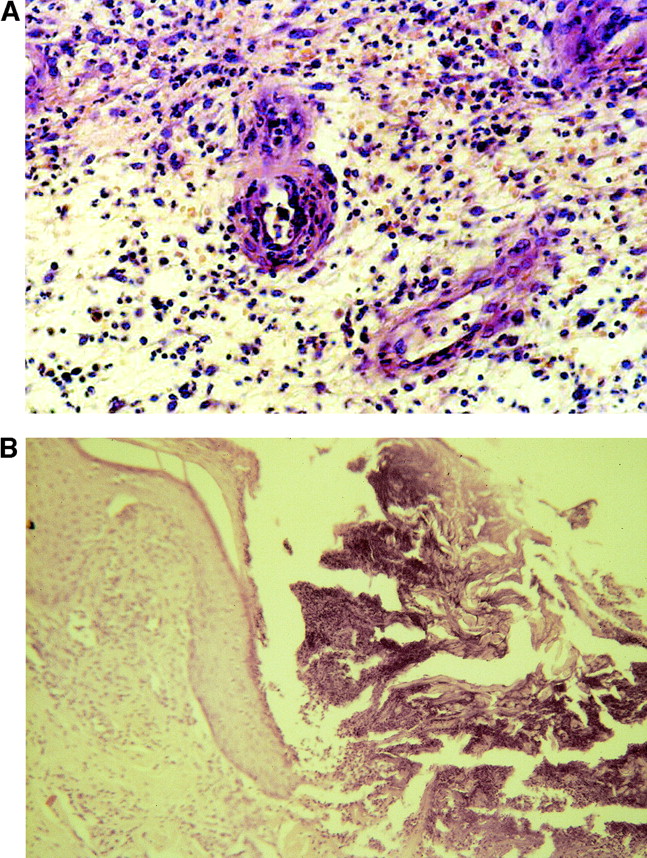
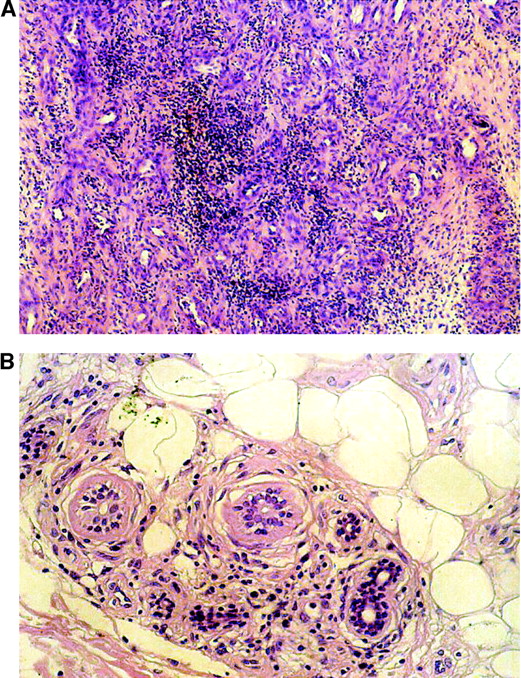
Although this was a small trial some very interesting observations can be made. The results would seem to indicate that pressure relief with a total contact cast is associated with changes in the histology. Total contact casting is associated with a clinically significant reduction of inflammatory and reactive components and acceleration of reparative processes.
Leave a Reply